

Dual Sympathetic Reset
(DSR) SGB Treatment for
Mental Health
An in-clinic, ultrasound-guided procedure designed to rebalance stress responses and support emotional regulation
About this treatment
Brief Overview of the Treatment
A medical procedure designed to regulate the autonomic nervous system and reduce the heightened fight or flight response. The treatment uses a targeted cervical nerve block to provide rapid relief from anxiety and post-traumatic stress symptoms.
Who is the treatment for?
Individuals experiencing chronic anxiety, PTSD, emotional regulation difficulties, or psychological stress that has not responded to other treatments

Number of Sessions and Duration
The protocol includes only two sessions, one week apart, each lasting about 15 minutes. For patients who respond well to the initial treatment, personalized maintenance sessions can be added as needed.
Brief Overview of the Treatment
A medical procedure designed to regulate the autonomic nervous system and reduce the heightened fight or flight response. The treatment uses a targeted cervical nerve block to provide rapid relief from anxiety and post-traumatic stress symptoms.
Who is the treatment for?
Individuals experiencing chronic anxiety, PTSD, emotional regulation difficulties, or psychological stress that has not responded to other treatments
Number of Sessions and Duration
The protocol includes only two sessions, one week apart, each lasting about 15 minutes. For patients who respond well to the initial treatment, personalized maintenance sessions can be added as needed.
What is Stellate Ganglion Block (SGB)?
Stellate Ganglion Block (SGB) is a procedure in which a local anesthetic is injected along the cervical sympathetic nervous system, a network of sympathetic nerves located in the neck that helps regulate many involuntary functions such as heart rate, blood pressure and sweating.
The treatment takes about 10 minutes and is performed by physicians who specialize in nerve blocks, using real-time ultrasound guidance to ensure precision and safety.
In recent years, SGB has emerged as a breakthrough intervention for PTSD and anxiety. By calming the brain’s overactive sympathetic nervous system and helping reset the heightened fight-or-flight response, the procedure has shown significant benefit for individuals living with trauma-related symptoms. Although SGB has long been FDA-approved as a pain-relieving treatment, its growing use for mental health conditions represents an important advance in the field.
The treatment is additionally approved by the National Council for PTSD in Israel, the Israeli Ministry of Health and the Rehabilitation Department of the Israeli Ministry of Defense as part of the recognized therapeutic options for individuals living with post-traumatic stress symptoms.
After the SGB treatments, many patients have experienced:
- Better sleep
- Better memory and concentration
- Decrease in anxiety, panic attacks and depression
- An ability to connect with others again
- Less jumpiness or nervousness
- Improved intimacy and sexual function
- Fewer intrusive thoughts and reactivity to triggers
- Increased overall sense of calm and well-being
DSR SGB can have dramatic positive effects on a wide range of symptoms and conditions.
How is the procedure done?
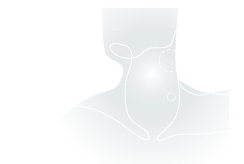
Using ultrasound guidance, a skilled pain specialist or anesthesiologist injects a local anesthetic into two nerve bundles near the base of the neck, which play a key role in the feedback loop between the brain and the sympathetic nervous system.

The treatment consists of two brief sessions, each lasting about 10 minutes—first on the right side and, about a week later, on the left. This process helps “reset” the sympathetic nervous system by reducing NE and NGF, promoting adaptive neural healing.

The treatment provides an immediate sense of relaxation and significantly alleviates
classic “fight or flight” symptoms like hyperarousal, anxiety attacks, irritability, and sleep disturbances.
Following treatment, patients may temporarily experience mild symptoms at the injection site due to the anesthetic, including red eye, facial warmth, arm tingling, nasal congestion, hoarseness, difficulty swallowing, and headache. These effects typically resolve within 6–8 hours and rarely last beyond 24 hours.
Payment and Financing
The SGB treatment is offered at our private clinic. For individuals formally recognized by the Ministry of Defense with a PTSD diagnosis who meet the required criteria, the treatment is fully covered. For all other patients, the full protocol of two treatments is priced at 10,700 ILS. However, thanks to our philanthropic support, every patient receives a subsidy of more than 50 percent, ensuring that no one pays more than 5,000 ILS for the full protocol (2,500 ILS per treatment). Certain groups may even qualify for additional subsidies.
See more

Funding and Subsidy Options:
- Rehabilitation Department, Ministry of Defense: For patients recognized by the Rehabilitation Department who meet the “third-line” criteria (unsuccessful attempts with two types of psychiatric medications and psychological therapy), the entire cost of the treatment is fully subsidized.
- Philanthropic Subsidy: We offer significant subsidies for SGB treatment, which vary based on the patient’s situation.

Funding and Subsidy Options:
- Rehabilitation Department, Ministry of Defense: For patients recognized by the Rehabilitation Department who meet the “third-line” criteria (unsuccessful attempts with two types of psychiatric medications and psychological therapy), the entire cost of the treatment is fully subsidized.
- Philanthropic Subsidy: We offer significant subsidies for SGB treatment, which vary based on the patient’s situation.
PATIENT GROUP | COST AFTER SUBSIDY (ILS) |
|---|---|
Nova Festival Survivors | FREE |
Active Reserve Soldiers & Special Forces Personnel | 2,000 |
Patients Recognized by the Victims of Hostile Acts Department | 3,000 |
All Other Patients Meeting Eligibility Criteria | 5,000 |
To receive the subsidy, a psychiatric diagnosis and an official document confirming eligibility must be presented.
PLEASE NOTE
- Currently, there are no reimbursements from health funds (Kupot Cholim) or private insurance for this treatment.
- If needed, you can contact a Stella representative to request a review for specific assistance and be added to a waiting list for additional subsidies beyond the standard rates.

Over 80 percent of patients showed clinically significant improvement across multiple trauma types
A large scale study including more than 300 patients found a substantial reduction in symptom intensity, independent of trauma type.

Twice the effectiveness compared to the control group in reducing symptom severity over time
A randomized controlled clinical trial demonstrated a significant and sustained reduction in PTSD symptom severity over an eight week follow up period.
Over 80 percent of patients showed clinically significant improvement across multiple trauma types
Twice the effectiveness compared to the control group in reducing symptom severity over time
Study by Dr. Lipov, founder of Stella USA reviewing the clinical evidence for the treatment of post-traumatic stress disorder. Over 80% showed clinical improvement
Utility of Cervical Sympathetic Block in Treating Post-Traumatic Stress Disorder in Multiple Cohorts: A Retrospective Analysis
100 Years of Clinical Research: From Pain to Mental Health
The use of SGB has been documented in the medical literature since 1926 for the treatment of various clinical indications. Since the 1990s, clinical studies and case reports have increasingly highlighted its effectiveness in significantly reducing symptoms associated with post traumatic stress disorder (PTSD) and anxiety related conditions.
Frequently asked questions about SBG treatment
If you didn’t find an answer to your question, or if you would like to speak to our team confidentially and for free, leave your details at the bottom of the page.
What are the side effects of SGB treatment?
Is SGB also effective for Social Anxiety or Performance Anxiety?
When social anxiety or performance anxiety are accompanied by acute physical reactions (such as trembling, stuttering, or sweating), SGB can help moderate the physical response. When the body remains calm, the patient’s self-confidence increases, and they succeed in coping with the threatening situations more effectively.
Is it possible to stop taking anti-anxiety pills after SGB treatment?
Is SGB treatment also suitable for anxiety disorders?
Has SGB treatment been scientifically proven?
Who is considered a suitable candidate for SGB treatment?
Is PTSD due to military service different from others, e.g., sexual assault?
Are there populations more vulnerable / exposed to PTSD than others?
Can PTSD be prevented?
Can PTSD occur in children?
Patient Testimonials
Some may experience instant relief, while others may see gradual progress or require additional treatments. It is essential to recognize that each patient’s unique journey is valid, and our team is dedicated to providing support throughout the entire treatment process.
Z. Sharon:
"I’m more emotionally and mentally balanced than ever. I’ve been freed from survival mode, immense inner suffering, depression, guilt,
Z. Sharon:
"I’m more emotionally and mentally balanced than ever. I’ve been freed from survival mode, immense inner suffering, depression, guilt,fears, anxiety, and stress. Even when these come up now, it’s only momentary—I’m able to shift out of it easily. My health is improving daily, I’m active and full of energy. The feeling of brokenness has been replaced by a sense of inner wholeness. If before I defined things as “before the trauma” and “after the trauma,” now it’s “before SGB” and “after SGB.”
R. Ben Shitrit:
"Thank you so much, you literally saved my life. I’ve returned to almost full functioning, including work, for the first time in four years."
R. Ben Shitrit:
"Thank you so much, you literally saved my life. I’ve returned to almost full functioning, including work, for the first time in four years."
M. Shhada:
"My body has adapted to the new state, no panic, no anxiety, everything flows normally. Thank you from the bottom of my heart."
M. Shhada:
"My body has adapted to the new state, no panic, no anxiety, everything flows normally. Thank you from the bottom of my heart."
N. Arbiv:
"The injections really helped me with eating, with breathing! I can move my body without fear, exercise, and feel a general sense of calm.
N. Arbiv:
"The injections really helped me with eating, with breathing! I can move my body without fear, exercise, and feel a general sense of calm.People around me noticed too. Thank you so much!
Z. Abraham:
"Three months have passed, which for a 48-year-old is just a blip on the timeline, but I can say that at this point, because of the treatment,
Z. Abraham:
"Three months have passed, which for a 48-year-old is just a blip on the timeline, but I can say that at this point, because of the treatment,my experience, feelings, and actions are in a different place. It’s not gone, and it’s not over, but it’s in a better place that allows for a better life. Whether it’s the treatment or something psychological, I can’t say, but I can say thank you, because I’m in a much better place since the treatment.
G. Balkitni:
"Before SGB treatment, I felt a constant physical tension—rapid heartbeat, sweating, sleep issues, trouble focusing, and I couldn’t relax.
G. Balkitni:
"Before SGB treatment, I felt a constant physical tension—rapid heartbeat, sweating, sleep issues, trouble focusing, and I couldn’t relax.The treatment gave me significant physical relief and a sense of calm. I sleep better now. Alongside SGB, I continue emotional therapy, and together they help me get the best results and maintain a peaceful, stable daily life.
Frequently asked questions about SBG treatment
If you didn’t find an answer to your question, or if you would like to speak to our team confidentially and for free, leave your details at the bottom of the page.
What are the side effects of SGB treatment?
Is SGB also effective for Social Anxiety or Performance Anxiety?
When social anxiety or performance anxiety are accompanied by acute physical reactions (such as trembling, stuttering, or sweating), SGB can help moderate the physical response. When the body remains calm, the patient’s self-confidence increases, and they succeed in coping with the threatening situations more effectively.